The fitness industry is extremely competitive. If your ideal clients can’t find you online, being a great personal trainer isn’t enough. That’s why SEO for personal trainers matters.

You could be training clients in person or offering virtual sessions, good SEO practices help people find you when they’re searching for a personal trainer.
After the pandemic, 83% of personal trainers plan to continue offering online classes to their client base, while only 14% say that they'll keep doing in-person training. [thePTDC.com - 2020]
In this guide, we’ll walk you through the essentials of SEO for personal training, from local optimization to content and backlinks, so your business gets the attention it deserves.
What is SEO (and Why Should Personal Trainers Care)?
Let’s break it down simply:
Think of SEO as the way to get your website in front of people when they Google things like “fitness trainer near me” or “personal trainer in [your city]".
It's not magic. It's not reserved for big companies. And you don't need to be a tech genius to benefit from it.
IMAGE
Here’s why it matters:
- Most clients start with Google. Whether someone wants to lose 20 pounds or get back in shape after an injury, their journey usually starts with a search.
- If you’re not showing up, someone else is. And that “someone else” might be less qualified but more visible.
- SEO brings long-term, high-quality leads. Unlike ads that disappear when your budget runs out, good SEO keeps working for you 24/7.
SEO helps you get discovered by people who are actively looking for your services. Additionally, it positions you as a trusted expert before they even meet you.
In short, if you’re not taking SEO seriously, you're leaving money (and potential clients) on the table. With this guide, you can do it by yourself, or you can take SEO Service from good digital marketing agency to get expert hands in it. Choice is yours.
Understanding How Clients Search Online
Here’s a fun truth: most of your future clients already know they need help. They just don’t know you exist yet.
So what do they do?
They go on the internet and type something like:
- “personal trainer near me”
- “fitness coach in [city]”
- “personal fitness trainer near me”
These are called local intent searches.
Here’s what matters:
- Your location is key. Most people don’t want to drive 45 minutes to the gym. They’re looking for someone nearby and fast.
- Page 1 is the only page that matters. Studies show that 75% of users never scroll past the first page of search results. So if you’re not there, you're invisible.
- Trust is built instantly. Showing up at the top (with solid reviews and a legit-looking site) makes you look more credible, even if the client has never heard of you.
Understanding how people search gives you a major advantage. If you can match their language, solve their problems, and show up in the right place, you’re already halfway to booking that first session.
Next up: how to own your local area online with smart, simple local SEO.
Local SEO Optimization for Personal Trainer: Be the Top Result in Your Area
Let’s say someone in your neighborhood just Googled “personal fitness trainer near me.” If your name doesn’t pop up in that little map box (called the Local Pack), guess what? You just lost a potential client, maybe one who lives five minutes from your gym.
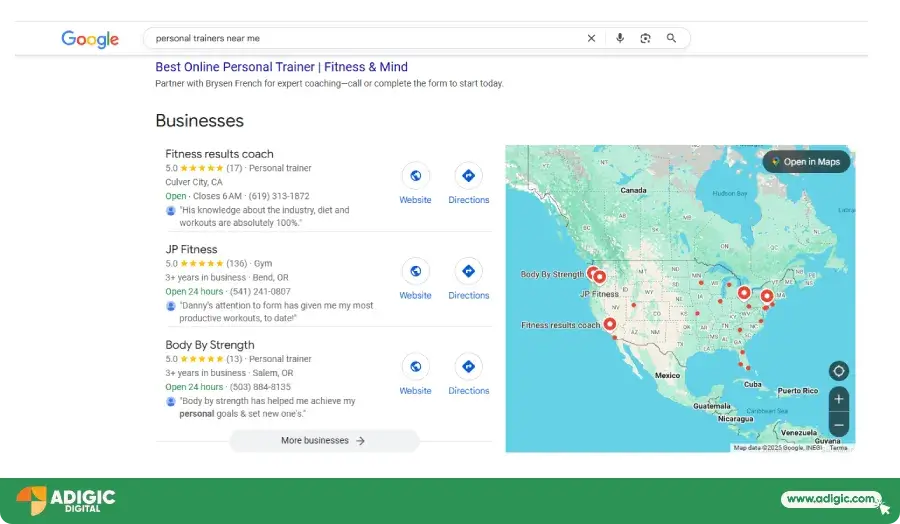
That’s where Local SEO comes in. It’s how you make sure Google knows where you are, what you do, and why you’re the best option nearby.
Here’s how to make it happen:
Claim and Optimize Your Google Business Profile
If you haven’t already, set up your Google Business Profile. This is your digital storefront on Google Maps. Add:
- Your business name, phone number, and address
- High-quality photos (of your gym, your training clients, etc.)
- Clear descriptions of your services
- Business hours and keep them updated
- A link to your website
- Add social media page links if you have any
Keep the Information Accurate & Same Everywhere (NAP Matters)
Your Name, Address, and Phone number, aka NAP, should be exactly the same across all platforms: website, social media, directories, etc. A small mismatch (“St.” vs “Street”) can confuse Google.
Use Local Keywords
Sprinkle in keywords like “fitness trainer in [your city]” or “personal trainer near me” on your homepage, service pages, and blog. But keep it natural, no weird robot talk.
Get Local Reviews (The Right Way)
Ask happy clients to leave a review on Google. It not only builds trust with future clients, but it also signals to Google that your business is legit and well-reputed.
Pro tip: Don’t copy-paste a request. Just say something like, “Hey, if you’re enjoying our sessions, would you mind dropping a quick review on Google? It really helps.
On-Page Search Engine Optimisation for personal trainers Websites
So, someone searched for “fitness trainer near me” and landed on your website. Great! But now what? If your site doesn’t clearly explain who you are, what you offer, and how to book a session, they’re hitting that back button faster than a treadmill sprint.
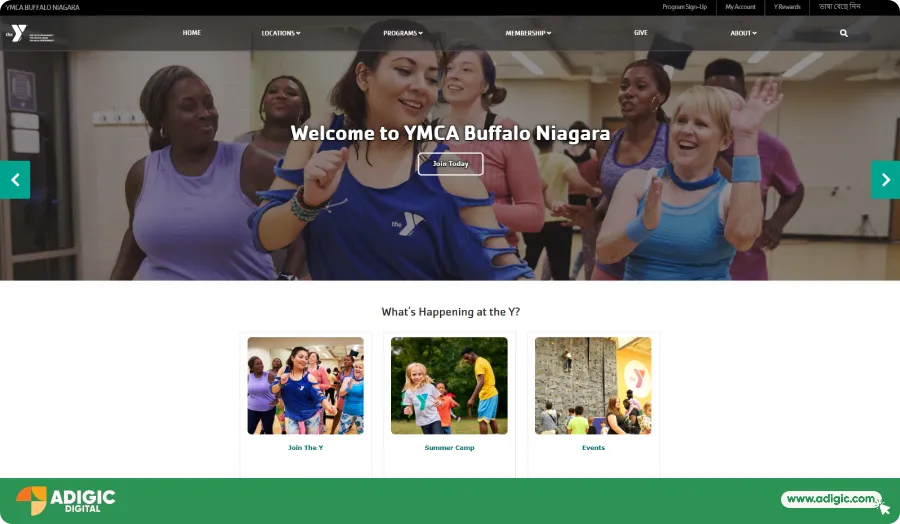
That’s where on-page SEO comes in. It’s about making sure each page on your site is easy to understand for both humans and search engines.
Here’s how to dial it in:
Use the Right Keywords Naturally
People will search your service with specified keywords. And you should optimize your website according to those keywords. For researching keywords, you can use any popular keyword research tools.
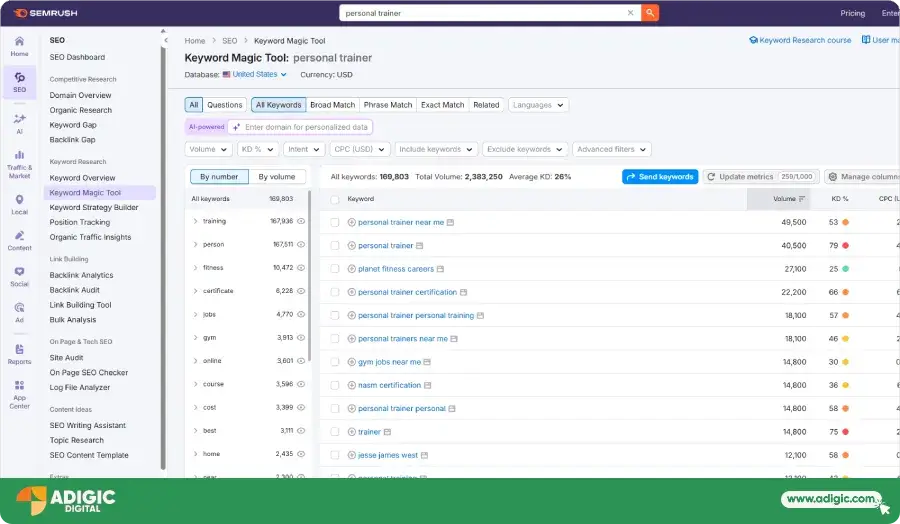
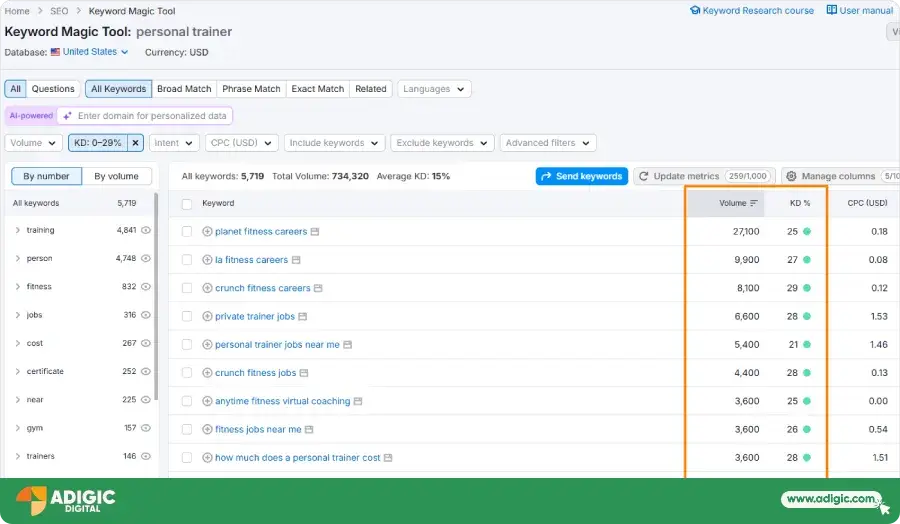
But not all the keywords have opportunities to rank easily. So, we'll try to find personal training keywords with high Potentials. For that, follow these steps.
- Click on "Volume" column to get high volume searches
- Click on "KD%" filter, input custom range from 0 to 29 and click "Filter" button
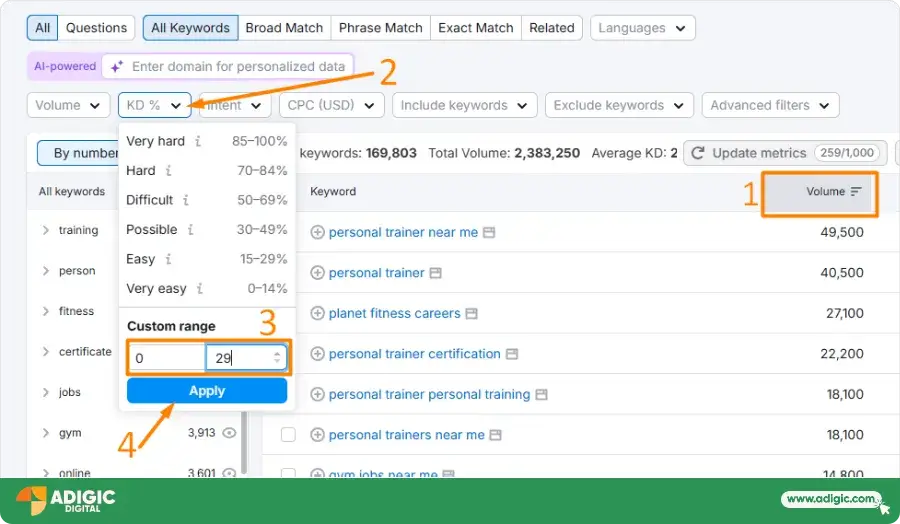
Now you'll get the list of keywords which have high search volume, but have lower keyword difficulties. This will help you to easily rank your desired keyword.
However, don't repeat random keywords 20 times. This is called keyword stuffing. Google’s smarter than that. This technique will hurt your website’s ranking.
Just make sure your main services are mentioned in a clear, natural way. For example:
- “I’m a certified personal trainer in Austin helping clients with weight loss, strength training, and mobility.”
- “Looking for a personal fitness trainer near me? I work with clients across downtown Chicago.”
Example of Good SEO Keywords for Personal Trainer
High-Intent "Local" Keywords
These are your "money" keywords. They are used by people ready to hire a trainer in their immediate area.
- Format:
[Service] + [City/Neighborhood]or[Service] + near me
- Personal trainer near me
- Fitness coach [City Name]
- Best personal trainers in [City Name]
- Private gym with personal trainer [City Name]
- Personal training studio near me
- Certified fitness instructor [City Name]
- One-on-one personal training [City Name]
- Affordable personal trainer [City Name]
- Female personal trainer near me
- Mobile personal trainer [City Name] (for home visits)
2. Specialized & Niche Keywords
These target specific goals or demographics. They often have lower competition and higher conversion rates.
- Format:
Personal training for + [Target Audience/Goal]
- Personal trainer for weight loss
- Strength training for beginners
- Personal trainer for seniors near me
- Postpartum fitness specialist [City Name]
- Personal trainer for busy professionals
- Youth athletic performance coach
- Prenatal fitness trainer [City Name]
- Personal training for women over 40
- Bodybuilding contest prep coach
- Corrective exercise specialist for back pain
Informational (Blog) Keywords
Use these for blog posts to build authority. They answer questions potential clients are asking.
- Format:
How to / What is / Best [Exercise/Routine] for...
- How much does a personal trainer cost?
- Benefits of hiring a personal trainer
- Personal trainer vs. gym membership
- Best exercises for fat loss
- How to stay motivated for the gym
- Beginner gym workout routine
- What to eat before a workout
- How to improve squat form
- Signs you need a personal trainer
- Home workout vs. gym workout
Create Dedicated Service & Location Pages
If you serve multiple areas, don’t cram everything onto one page. Instead, create separate pages for things like:
- “Online Personal Training”
- “Personal Trainer in NYC”
- “1-on-1 Coaching for Beginners”
This helps the readers and search engines understand exactly what you offer and where.
Write Compelling Meta Titles & Descriptions
These are the snippets that show up on Google’s results page. Keep them short, clear, and click-worthy. For the Meta Description, it is better if you keep it within 160 characters.
Use Internal Links (Google Loves Structure)
Let’s say you have a blog post on “Best Home Workouts”. You can link it to your service page for online coaching. This helps both readers and search engines navigate your site better.
You Need Helpful Content on Your Website
Now let’s talk content. Your website should contain content that helps people, earns trust, and makes Google say, “Yep, this person knows their stuff.”
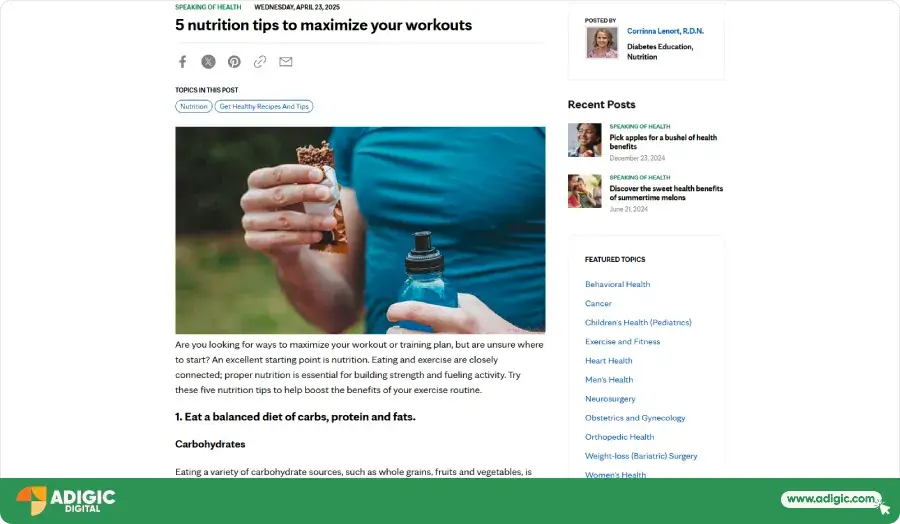
Because here’s the truth. Most people aren’t ready to hire a personal trainer the moment they land on your site. They’re still researching. Still nervous. Still wondering, “Is this trainer right for me?”
Your content should answer their questions before they even ask. So think about what your clients ask you all the time. Turn those into helpful blog posts. Like:
- “How to Stay on Track With Fitness During a Busy Workweek”
- “Strength Training vs. Cardio: Which One’s Better for Weight Loss?”
- “What to Expect in Your First Personal Training Session”
You must write informative articles that are friendly and humane. Avoid keyword stuffing and robotic writing. Try to add high-quality, relevant images. Using multiple kinds of content (blogs, videos, podcasts, etc.) is another good idea.
Fitness is personal. So don’t be afraid to share your story, your style, and who you love working with. Clients aren’t just buying a service, they’re choosing a person. And if they like your vibe, they’re far more likely to reach out. Finally, use local keywords.
Technical SEO & Backlinks for Personal Trainer Websites
You will need to keep in mind a few tips when working on technical SEO. For instance:
- Mobile-friendly design: Most people will find you on their phone. If your site looks weird or loads slowly, they’re gone. So, a responsive theme is essential
- Fast loading: Compress images, use a lightweight theme, and avoid bulky plugins. Google likes speed, so do impatient browsers.
- Secure site (HTTPS): If your URL doesn’t have that little lock icon, get it sorted. It’s about trust.
- Fix broken links: Clicking on a dead page = frustration. Use free tools to scan and clean them up.
Easy ways to earn legit backlinks:
- Share client success stories (with permission!) that others might want to feature
- Collaborate with local businesses, like writing a guest blog for a health food store or gym
- Get listed in local directories (think Yelp, local fitness hubs, Chamber of Commerce, etc.)
Mistakes to Avoid and How to Track Your SEO Like a Pro
Even the most motivated trainers can trip up with SEO. Here’s how to avoid the common missteps that hold fitness websites back. And how to know if what you’re doing is actually working.
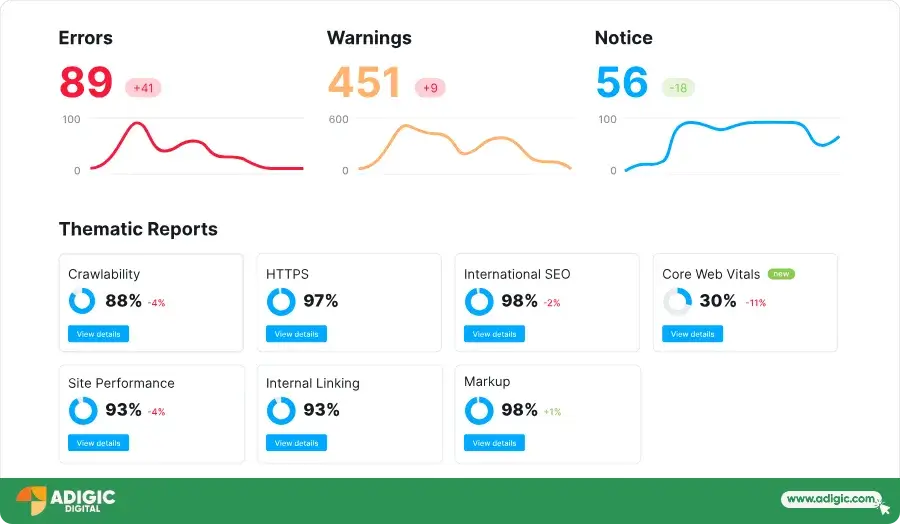
Common SEO Mistakes Personal Trainers Make:
- Ignoring local SEO: If you’re not showing up for “personal trainer near me,” you’re losing local clients. Claim your Google Business Profile and optimize for your city or neighborhood.
- Overusing keywords: Stuffing “fitness trainer near me” into every other sentence? Google sees that as spammy, and so do your visitors.
- Not optimizing for mobile: Most of your audience is searching on their phones. If your site’s clunky on mobile, they’ll bounce.
- No fresh content: A blog that hasn’t been updated in two years doesn’t inspire confidence (or rank well).
- Forgetting about metadata: Title tags and meta descriptions still matter. Don’t leave them blank or generic.
How to Track Your SEO Progress (Without Overcomplicating It)?
- Google Search Console: Free, simple, and gold for seeing which search terms bring people to your site.
- Google Analytics: Track visits, see what pages people view, and how long they stay.
- Keyword tools: Free tools like Ubersuggest or paid options like Ahrefs can show keyword rankings over time.
- Local rankings: Do a quick check by searching your service + location, e.g., personal fitness trainer near ‘your city’ in incognito mode. See where you stand.
Bonus tip: Keep a monthly log. Track your traffic, top pages, and keyword rankings. That way, you’ll know what’s working and where to double down.
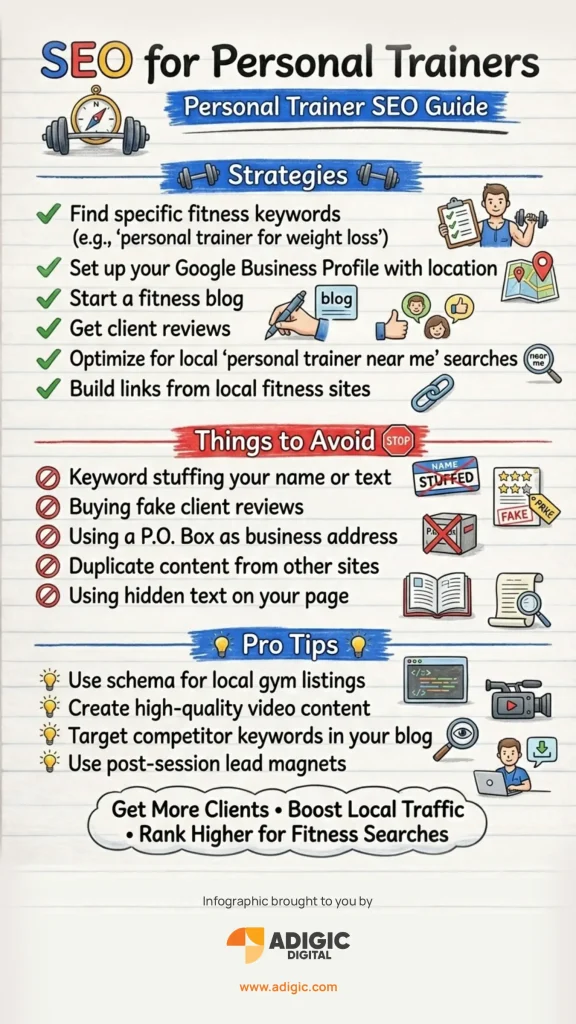
FAQs on SEO for Personal Trainers
We have answered some of your questions regarding SEO for fitness.

How Important Is Seo For Online Fitness Trainers?
What is SEO in Fitness?
What Is SEO For Personal Trainers?
What exactly is SEO for personal trainers, and why is it important?
How can I optimize my site for private training sessions?
Do you have any quick SEO tips for personal trainers to start ranking today?
Claim your Google Business Profile: This is essential for showing up in local map results.
Optimize for "Near Me" searches: Include your location in your meta descriptions and footer.
Use Alt-Text on images: Describe your photos using keywords like "seo personal trainer" or "client performing squats" to help Google "see" your content.
Speed matters: Ensure your website loads in under 2 seconds, especially on mobile devices.
What is the difference between general fitness coaching SEO and athlete-specific SEO?
Should I hire professional SEO services for personal trainers, or do it myself?
How long does it take to see results from my personal training SEO efforts?
Wrapping up
SEO might seem like a whole other world compared to reps and routines. But just like fitness, consistency, and the right strategy make all the difference. By investing in solid local SEO, optimizing your site, creating helpful content, and earning trust through reviews and backlinks, you set yourself apart in a competitive market.
This guide gave you the blueprint. Now it’s about action. And if you’d rather leave the technical stuff to someone who lives and breathes SEO, we’re always here to help.